Eng
Eng


Genesis: Historical research
Reference:
Mingazov, A.O. (2026). Alexey Lukich Lyubushin: 30 years of service to the sick. Genesis: Historical research, 6, 97–113. https://doi.org/10.25136/2409-868X.2026.6.79799


|
Library
|
Your profile |
 This work is licensed under a Creative Commons Attribution-NonCommercial 4.0 International License.
|
Genesis: Historical research
Reference:
Mingazov, A.O. (2026). Alexey Lukich Lyubushin: 30 years of service to the sick. Genesis: Historical research, 6, 97–113. https://doi.org/10.25136/2409-868X.2026.6.79799
Alexey Lukich Lyubushin: 30 years of service to the sick
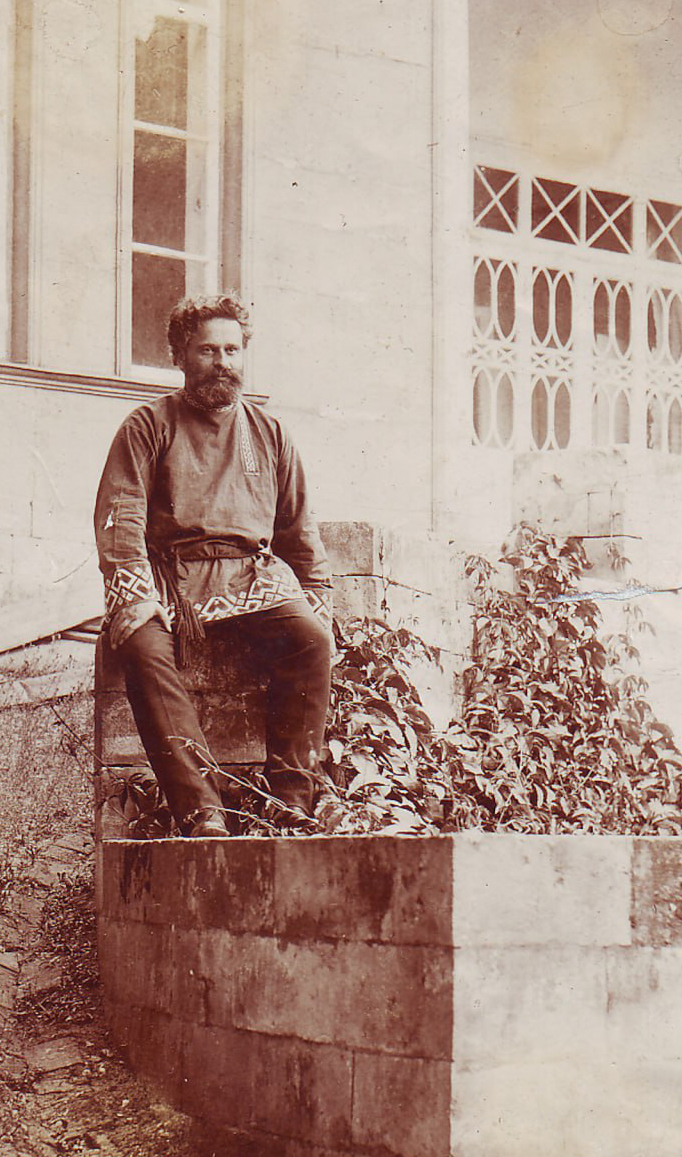
DOI: 10.25136/2409-868X.2026.6.79799EDN: PJCGSRReceived: 05/08/2026First review received: 06/01/2026 19:12 — manuscript returned for revisionRevised manuscript submitted: 06/04/2026 12:57Final review received: 06/05/2026 12:42 — recommendation for publication.The article is published in its final version as approved following the last positive peer review recommending acceptance for publication. It incorporates revisions made by the author in response to prior negative peer review reports that did not recommend publication. All peer review reports, including initial negative reviews, are published in open access alongside the article. All versions of the author’s revisions are archived in the publisher’s repository and may be made available upon reasonable request in accordance with Elsevier’s editorial policies and applicable data availability requirements. Read all reviews on this article Published: 06/20/2026Abstract: The article presents materials about the life and activities of Professor A. L. Lyubushin, MD, a graduate of the Medical Faculty of Moscow University in 1894. He made a significant contribution to the development of Russian psychiatry. The main area of his scientific activity focused on psychiatry and neurology. Being the author of works on nervous and mental illnesses, he was one of the first in Russia to describe microscopic changes in the cerebral cortex in early dementia. He paid special attention to the organization of psychiatric care. His work at the Preobrazhenskaya Psychiatric Hospital gave him the opportunity to write a number of works on the organization of hospitals, their management and the organization of staff. As a senior resident and then the chief doctor of the hospital, A. L. Lyubushin took an active part in the establishment of new hospital departments. During the First World War, the psychiatrist was actively involved in helping mentally ill soldiers when he worked for the Russian Red Cross Society. He was a talented teacher. After he was elected a privatdozent of Moscow University in 1905, A. L. Lyubushin passed on his knowledge and love for science to young doctors until the last days of his life. The methodological foundation of the research consisted of a combination of three approaches: source analysis, historical‑contextual approach, and biographical method. The scientific novelty lies in the fact that, based on archival materials and the physician’s publications, his intellectual portrait has been reconstructed, and the key stages and directions of his professional career have been identified. The obtained results fill a gap in historiography and expand the understanding of A. L. Lyubushin’s role in the history of the Preobrazhenskaya Hospital in the late 19th – early 20th centuries. The set of materials introduced into scholarly circulation expands the source base and creates favourable conditions for further research in the field of the history of Moscow’s municipal psychiatric service. The results of the study have practical significance as a source of previously unknown historical facts about the resident physician and later chief physician of the Preobrazhenskaya Hospital (now PKB No. 4 named after P. B. Gannushkin) and hold practical value for the institution. Keywords: A. L. Lyubushin, psychiatry, history of medicine, Preobrazhenskaya Psychiatric Hospital, Moscow psychiatric service, history of psychiatry, intellectual portrait, are for the mentally ill, the psychiatrist’s biography, Moscow psychiatristsThis article is automatically translated. You can find original text of the article here. Introduction. The biography of Professor A. L. Lyubushin, Doctor of Medicine (Fig. 1) has not received special study in scientific, historical and medical literature. Almost nothing is known to the modern reader about the personality and activities of a psychiatrist, with the exception of brief biographical summaries presented in open sources. In 1913, a small review of his personality appeared in the anniversary collection of A. Shevtsov [1]. In the monograph by N. N. Bazhenov, one can find a list of works by A. L. Lyubushin [2]. In L. M. Rosenstein's obituary dedicated to A. L. Lyubushin, biographical information about the psychiatrist is presented fragmentally [3]. The research interest is justified by the need to fill a gap in the history of the Moscow city psychiatric care service by reconstructing the intellectual portrait of one of the chief doctors of the Preobrazhenskaya Psychiatric Hospital (now PKB No. 4). The biography of A. L. Lyubushin, in the author's opinion, has been undeservedly left out of the scope of a special study. On the other hand, the author's personal interest in developing the topic is determined by the desire to continue the long-term research of the chief physician of the 1st Moscow Psychiatric Hospital (one of the subsequent names of the Preobrazhenskaya Hospital) M. A. Dzhagarov, who, until 1941, painstakingly collected material on the activities of domestic psychiatrists to prepare a voluminous work on the history of psychiatry in images and biographies.. But the war, the post-war years with their burden of tasks and the death of M. A. Dzhagarov did not give him the opportunity to disseminate and summarize the collected material. The combination of all these factors determines, mainly, the focus of this study.
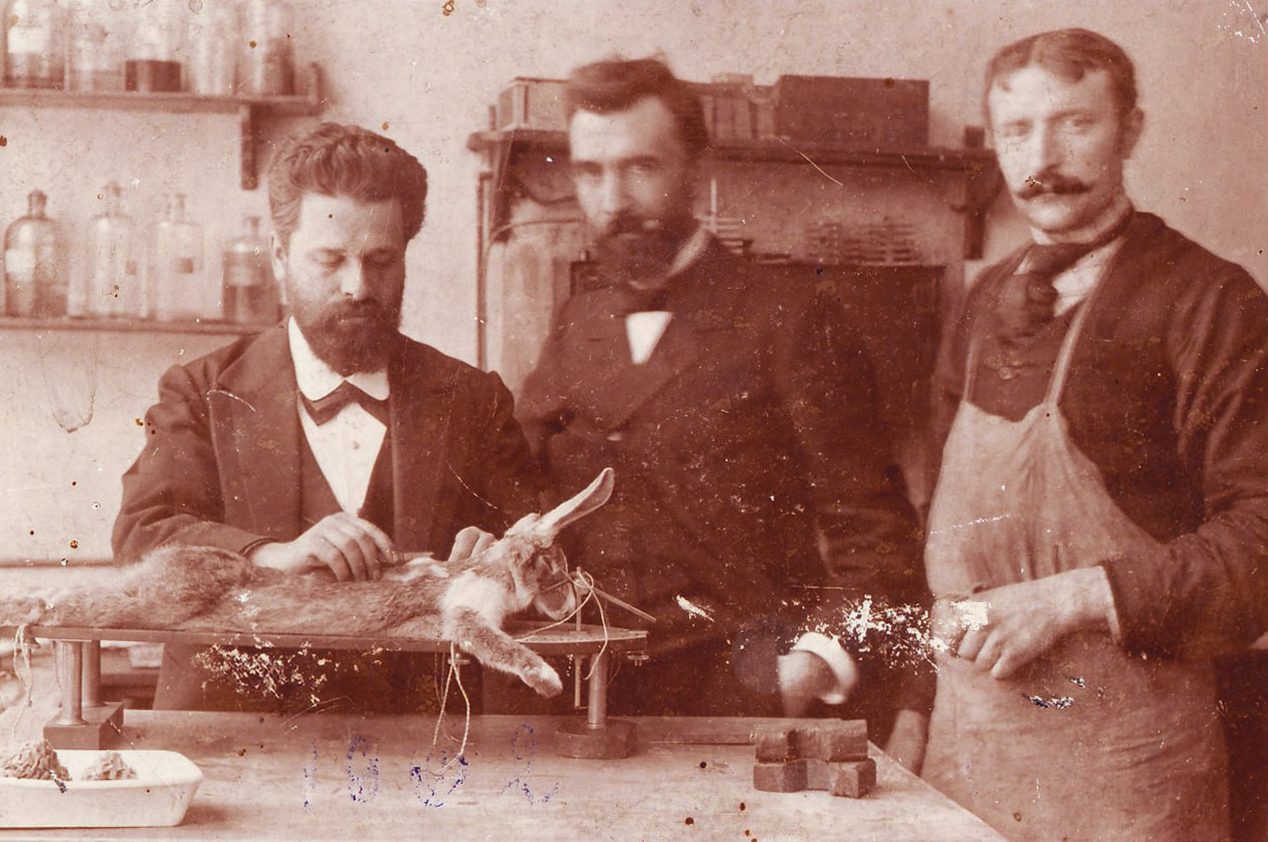
Fig. 1. Lyubushin Alexey Lukich From the family archive The purpose of the work is to systematize information from the archival funds and publications of A. L. Lyubushin for the reconstruction of the doctor's biography and to identify the key areas of his professional activity. Methods and materials. The research is based on a comprehensive approach to the analysis of the life and work of Professor of Medicine A. L. Lyubushin. In the process of source analysis, an array of documents was involved, including unattributed materials from the Archive of the Museum of the Psychiatric Clinical Hospital No. 4 named after P. B. Gannushkin (former Preobrazhenskaya Hospital) and the personal archive of the Lyubushin family. The materials are divided into groups according to their content: each group reflects a certain stage or direction of A. L. Lyubushin's professional activity. The first group consists of archival collections of the funds of the State Archive of the Tver Region, the Central State Archive of Moscow, and the Archive of the P. B. Gannushkin PKB No. 4 Museum. Special attention is paid to the materials containing biographical information about A. L. Lyubushin's education, his professional development and main activities, in particular, as a doctor at the Preobrazhenskaya Hospital. The second group of sources reflects the doctor's public activities related to the development of the city psychiatric care service. The emphasis is placed on the participation of A. L. Lyubushin in the creation of new and improvement of old psychiatric hospitals and clinics, as well as their administrative and economic structure. The most informative in this context are the materials of the Moscow City Duma concerning the reorganization of psychiatric care in Moscow in the period 1903-1914, as well as the reports of the doctor reflected in the specialized medical press. The documents of the State Archive of the Russian Federation contain information about the work of Dr. A. L. Lyubushin in the Russian Red Cross Society. When comparing the professional views of a doctor with the approaches of his colleagues and identifying the interrelationships of his ideas with the socio‑historical context, this study uses a historical and contextual approach. The professional positions of a psychiatrist are analyzed in connection with the general trends in the development of psychiatry in the context of socio‑political transformations and the events that took place against their background in the institutions where A. L. Lyubushin worked. To reconstruct the intellectual portrait of the doctor, a historical and biographical method was used, which involved not only archival materials, but also publications by A. L. Lyubushin in the field of clinical research. At the same time, attention was focused on the general characteristics of the psychiatrist's scientific interests, rather than on a detailed analysis of individual works. The memoirs of his wife and contemporaries completed the picture, revealing A. L. Lyubushin's attitude to teaching. This comprehensive approach ensured the reliability of the results and allowed us to restore the sequence of events in the biography of A. L. Lyubushin. The main part. Education and professional activity. Alexey Lukich Lyubushin was born on March 11, 1869 in Polotsk, in the family of Luke Ivanovich Lyubushin, an apothecary student at the Polotsk Military Gymnasium, and his lawful wife Paraskeva Vasilyeva [4]. In 1875, Alexey Lukich, at the age of 6, enrolled in the Rzhev Men's Gymnasium, graduating from the last 4th grade. After his father moved to Tver to work at the Morozov factory, Alexey Lukich continued his education course in 1883 from the 5th grade at the Tver Classical Gymnasium [4]. Upon its completion in 1888, he moved to Moscow, where he entered the medical faculty of Moscow University [5]. After graduation, on October 16, 1894, with the rank of physician, he assumed the post of supernumerary resident of the Preobrazhenskaya Hospital for the Mentally Ill [6]. On October 25, A.L. Lyubushin began to perform his duties. According to L. Rosenstein, Alexey Lukich joined the ranks of psychiatrists from his student days. After graduating from the university, at the initiative of his teacher S. S. Korsakov, he was sent to work at the Preobrazhenskaya Hospital [7]. He "kept him from leaving for the provinces and, having kept him in Moscow, in the person of A. L. he received a faithful pupil on the other side of Moscow", far from the clinic on Devichye Pole [3]. Indeed, A. L. Lyubushin linked all his medical and social activities with the Moscow City Organization, repeatedly proving his connection with the Korsakov school during his 30-year service. At the same time as working at the hospital, Alexey Lukich continued to conduct research activities. During 1896-1899 he passed the exams for the degree of Doctor of Medicine at Moscow University. In the discipline "nervous and mental diseases", in questions about epilepsy, muscular atrophy, primary insanity and periodic psychoses, A. L. Lyubushin was examined by his mentor S. S. Korsakov. In terms of the physiology of the body, the test was conducted by I. M. Sechenov [8]. On March 21, 1899, A. L. Lyubushin was reassigned by the Medical Board to the position of full-time resident at the Preobrazhenskaya Hospital, where his scientific work began. So, acting as a doctor of the 1st women's department, he paid special attention to a patient who was admitted in November 1898 under his supervision. Lyubushin's research interest was aroused by the unconventional nature of the disorder of the patient's nervous system, which manifested itself, on the one hand, in the "hysterical nature of suffering", on the other, indicated an organic disease of the brain and spinal cord, which, according to the resident, had previously been rare in psychiatric practice [9, p. 695]. A. L. Lyubushin presented the results of his observations in a report at a meeting of the Society of Neuropathologists and Psychiatrists at Moscow University on May 14, 1899. He concluded that the patient suffered from a dementia-like form of progressive paralysis, complicated by symptoms that, according to A. L. Lyubushin, were the result of hysteria in the patient. The doctor's observation of a case of a combination of organic pathologies of the nervous system with hysterical disorders was an advanced experience. For example, in the Preobrazhenskaya Hospital, during the 4 years of Lyubushin's practice, the observation of more than 100 paralytics and many hysterical patients showed that there was only one case in which a hysterical patient developed progressive paralysis, namely the woman whom A. L. Lyubushin observed. For the European psychiatric experience, examples of the simultaneous existence of hysteria and general increasing paralysis were also rare [9, p. 705]. In order to continue developing his scientific interests in the field of nervous system research, in particular to prepare for writing his dissertation, A. L. Lyubushin applied for permission to take a vacation abroad from January 1, 1901, during which he studied for 4 months at the neurological laboratory of the University of Louvain in Belgium under the supervision of Professor Van Gehuchten (Fig. 2) [5].
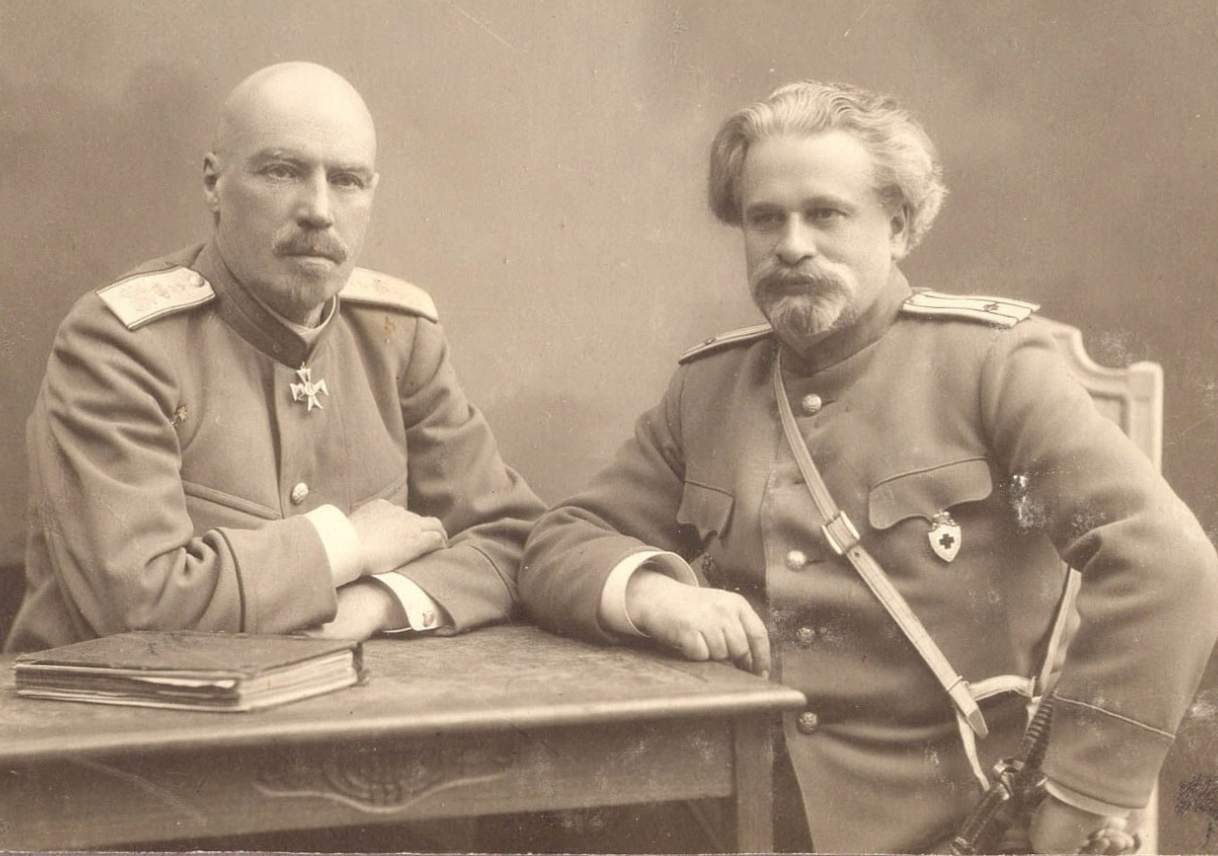
Fig. 2. Lyubushin A. L. in the laboratory of the University of Louvain From the family archive Together with his teacher A. L. Lyubushin wrote three works in French dedicated to: 1) endogenous fibers of the anterolateral cord of the cervical spinal cord; 2) localization and displacement of the terminal cone as markers of structural changes in the spinal cord; 3) the effect of local peripheral nerve injury on the spinal cord pathways (descending and ascending) [3]. A review of these works shows that the main focus of the doctor was to study the structural and functional changes in the nervous system during peripheral nerve injury and to assess their effect on the spinal cord. During 1901-1903, A. L. Lyubushin continued his studies at the Pathology and anatomical laboratory of the Preobrazhenskaya Hospital. After the death of a patient suffering from paralytic dementia complicated by hysteria, I conducted a study of her central nervous system. Based on the revealed pathological changes in the brain, compared with the clinical symptoms of the patient's disease, he was able to confirm his assumption: the patient simultaneously suffered from progressive paralysis and hysteria [10]. Another study by A. L. Lyubushin, presented at the VIII Pirogov Congress in 1902, contributed to the understanding of the pathogenesis of early dementia (dementia praecox). Based on macro‑ and microscopic analysis of the cerebral cortex, anatomical and pathological changes were revealed in two patients with early manifestation of the disorder, which indicated the organic nature of the disease [11]. On March 24, 1903, A. L. Lyubushin, having submitted his dissertation "Some experimental data on the issue of endogenous fibers in the anterolateral columns of the spinal cord" to the Medical Faculty of Moscow University, applied to be admitted to the defense for the degree of doctor of medicine [5]. A commission convened by the dean of the faculty, K. F. Klein, decided to allow the doctor to defend himself. In his review of A. L. Lyubushin's dissertation, Professor I. F. Ognev wrote: "The work of doctor A. Lyubushin is an extensive and thorough monograph on the above-mentioned issue. ...The method chosen by the author was the only one that could provide indisputable and precisely substantiated conclusions. There is no doubt that Mr. Lyubushin has mastered this method completely, and therefore the results he has obtained can be treated with full confidence" [5]. The public defense of the dissertation took place in the auditorium of the Histological Institute in the old building of Moscow University on May 8, 1903. The official opponents were professors: I. F. Ognev, P. I. Karuzin and the dissector M. M. Gardner [12]. On May 31, 1903, A. L. Lyubushin was awarded the degree of Doctor of Medicine by the decision of the Scientific Council [13]. The doctor's manuscript is the result of his work over several years. It began in the neurological laboratory of the University of Louvain under the supervision of Professor Van Gehuchten, but most of it was performed at the Histological Institute of Moscow University under the direct supervision of Professor Ivan Florovich Ognev. To solve this problem, A. L. Lyubushin used an exclusively experimental method, having conducted 20 experiments on animals. The doctor also carried out the processing of some of the material in the pathology and anatomical office of the Preobrazhenskaya Hospital for the Mentally Ill. The dissertation is divided into several chapters: a literary review, a description of the methods of partial destruction of the gray matter of the spinal cord. The contents of the third and fourth chapters reflect the results of A. L. Lyubushin's own research and general conclusions from them [14]. In February 1904, A. L. Lyubushin submitted a petition to the Board of the Ladies' Trusteeship for the Poor to be designated a specialist doctor at St. Peter's Hospital. Sofia, leaving him in his position as a full-time resident at the Preobrazhenskaya Hospital. There were no obstacles from the leadership of the latter [13]. On January 25, 1905, the Dean of the Faculty of Medicine, K. F. Klein, petitioned the rector of the University to accept A. L. Lyubushin as a privatdozent at the Department of Nervous and Mental Diseases to teach the course "Teachings on brain functions applied to the clinic of nervous and mental diseases" [15]. On April 27, 1905, A. L. Lyubushin was elected a privatdozent of Moscow University. L. Rosenstein wrote about A. L. Lyubushin's pedagogical activity: "he loved scientific work passionately, and especially teaching psychiatry to others. "..." shows his love and talent as a teacher in the training of young doctors, nurses and students" [3]. During the leadership of the Department of Psychiatry by V. P. Serbsky, A. L. Lyubushin taught a course on organic psychoses. V. P. Serbsky strongly recommended that students and doctors of the clinic attend these lectures, noting their high scientific and practical value due to their reliance on the extensive clinical base of a large hospital. During the December Revolution of 1905, A. L. Lyubushin continued to work at the Preobrazhenskaya Hospital. During the period of the growth of the political liberation movement, many representatives of Moscow psychiatry reacted vividly to the events, protesting attempts to introduce armed groups into psychiatric hospitals. During these days, the medical staff of the Preobrazhenskaya Hospital was on standby. The main task was to prevent the strike movement from seizing junior staff. At the hospital's conference, all doctors were asked to involve their family members on duty. Since the beginning of the strikes in Moscow, the hospital was preparing to be converted into an infirmary, for which a red flag was hung. In order to preserve the capacity of the institution and to organize medical care for victims of street clashes, food and water were harvested [2]. Applicable to A. L. Lyubushin, we can say that in the year of the revolutionary upsurge, he remained neutral and focused his attention on helping the patients of the Preobrazhenskaya Hospital. The statement of the mayor of Moscow about the doctor reads as follows: "The person in question has not been noticed in anything politically reprehensible" [15]. One of the consequences of the 1905 revolution was the reactionary policy of the government, which expressed itself in an attempt to bring Moscow University back under ideological and administrative control. The circular "On the temporary prohibition of public and private student gatherings", introduced in 1911 by the Minister of Education L. A. Kasso, a document that actually encroached on the autonomy of the university, led to the resignation of the higher school administration. This decision caused outrage among liberal professors. A number of professors and associate professors left the university, seeing this as the only way to fight for the institution's autonomy and a means to preserve their dignity in conflict with the ministry. The Department of Nervous and Mental Diseases suffered the most at the Faculty of Medicine, which lost half of its teachers. Professors V. K. Roth, V. P. Serbsky, and privatdozents G. I. Rossolimo, P. B. Gannushkin, and M. I. Molchanov retired [16]. There are no professors left in this department, she is orphaned. With the departure of V. P. Serbsky, Minister of Public Education L. A. Kasso offered a professorship in the clinic to A. L. Lyubushin, but he, driven by a sense of civic duty and dedication to the Korsakov school, refused this honor. [3, 17]. After the Casso case, he moved in February 1911 to the position of a hygiene teacher in the senior classes of the Moscow 2nd Gymnasium [13]. Having devoted himself to teaching practice, A. L. Lyubushin did not ignore the scientific and practical side of his life. While working at the Preobrazhenskaya Hospital, in 1907, he bought out the estate previously owned by architect P. A. Drittenpreis and opened a private hospital for the mentally ill with 6 beds [18]. In 1909, a two-story stone building with a small one-story extension and a wooden wing were built on the site of the old buildings in the northeastern part of the site for the clinic [19]. In the autumn of 1907, he applied for the vacant position of director of the Alekseevskaya Psychiatric Hospital after the departure of P. P. Kashchenko [18]. However, a more experienced doctor, A. I. Malshin, was chosen for this post. In 1908, at the December meeting of the Moscow Society of Neuropathologists and Psychiatrists, A. L. Lyubushin was elected to its full membership, and in 1914 became its chairman [20, 21]. Also, since 1903, he was a full member of the Department of Physiology of the Imperial Society of Lovers of Natural Sciences, Anthropology and Ethnography; a member of the Society of Doctors in the Service of the Moscow City Public Administration, and a staff member of the Pedagogical Society affiliated with Moscow University [5]. A separate area of practice of A. L. Lyubushin is the activity in the field of organization of psychiatric work. He repeatedly traveled abroad, where he got acquainted with the management structure of clinics, their administrative and economic structure and the conditions of psychiatric care in them. A. L. Lyubushin took an active part in the work of the psychiatric commission, established in October 1903 by the Moscow City Duma to develop the issue of reorganizing and further expanding the care of the mentally ill [22]. In particular, together with the acting chief physician of the Preobrazhenskaya Hospital, N. A. Buneev, A. L. Lyubushin participated in the first meeting of the commission on January 21, 1904, where the rules of admission to psychiatric institutions, the organization of patronage services (urban and rural), the expansion and improvement of the Preobrazhenskaya and Alekseevskaya hospitals, the possibility of setting up a new third psychiatric hospital and others . Subsequently, in 1912, the Psychiatric Commission, based on the report of V. A. Grombakh, again raised the issue of expanding psychiatric care. In an attempt to solve the problem of hospital overcrowding, A. L. Lyubushin proposed to deploy 130 beds in the Preobrazhenskaya Hospital and build a 3rd hospital [23]. The Commission considered A. L. Lyubushin's report not exhaustive and instructed the doctor in April 1912 to develop the issue and compile a report on the construction of the 3rd psychiatric hospital [24]. The hearing and discussion of the draft took place in March 1913. However, that was the end of the matter, leaving the unrealized ambition of the ideal scenario. Planning for the construction of a new facility with 1,000 beds stopped due to the outbreak of war in 1914 [23]. The most productive application of A. L. Lyubushin's professional experience is connected with the implementation by the City Administration of the project of new departments of the Preobrazhenskaya Hospital. Over the 30 years of his service at the institution, the latter has not only changed its name, but also significantly expanded its infrastructure. During this period, new departments and services of the hospital were set up near Staraya Preobrazhenka, on the opposite bank of the Yauza River, which, as L. Rosenstein emphatically emphasizes, were "created by the hands and vital juices of Alexei Lukich; here he laid his heart" [3]. With the opening of new admissions and observation departments at the Preobrazhenskaya Hospital on August 6, 1910, A. L. Lyubushin was assigned to head the 4th men's department. It was here, for the first time in the history of the institution, with the direct participation of a doctor, that the system of patient care was implemented with the help of the institute of interns and nurses. Despite the skepticism expressed at the beginning, in particular, related to the idea of setting up a similar care system specifically in the troubled men's department, A. L. Lyubushin over the next year and a half of personal experience came to the conclusion that the new type of care could not only be feasible, but also, if the identified shortcomings were eliminated, it could contribute "to the care of there are many bright sides for the mentally ill" [25]. The psychiatric clinic of the Ministry of Internal Affairs, founded by the chief physician of the Preobrazhenskaya Hospital, N. N. Bazhenov, is located on the basis of 4 departments. About the benefits that interns could derive during their time in the institution, A. L. Lyubushin wrote: "the study of psychiatry is possible not only in the clinic, but also in any well-equipped psychiatric hospital. The latter [Preobrazhenskaya] has a huge amount of clinical material, laboratories, libraries, using which one can not only learn how to recognize and treat mental illnesses, but if desired, further development of issues from the field of both theoretical and practical psychiatry is also possible. ...there is a full opportunity to prepare for independent residency positions in psychiatric institutions within two to three years" [25]. Activities during the First World War. The outbreak of the First World War set the task for the Russian medical society to deploy a wide network of assistance to wounded soldiers. The psychiatric community actively adapted the experience gained after the Russian-Japanese War in the evacuation and hospitalization of the mentally and mentally ill. Meanwhile, in Moscow, with the growing flow of mentally ill soldiers evacuated from the front, the city administration and the Red Cross society set up psychiatric hospitals. This period was reflected in the history of the Preobrazhenskaya Hospital through the opening, in addition to receiving mentally ill soldiers, in August-September 1914 of a hospital of the 3rd category - patronage – for lightly wounded and recovering soldiers. A. L. Lyubushin's interests in helping mentally ill soldiers were reflected not only in his work at the Preobrazhenskaya Hospital, but also in his participation in the work of charitable organizations. On June 15, 1915, he assumed the duties of chief physician of the 1st psychiatric hospital of the Russian Red Cross Society [26]. The institution, located in the building of the 2nd Moscow Men's Gymnasium, began receiving mentally ill soldiers on August 3, 1915. On October 21 of the same year, courses for the training of nurses in the care of the mentally ill were opened at the named institution and at the 81st evacuation hospital. A. L. Lyubushin was elected as the head. He also conducted classes in the disciplines of "psychiatric clinic" and "management of the administrative and economic part in hospitals and infirmaries of wartime" [27]. The teaching consisted of giving lectures and gaining practical experience, for which the students of the course were on duty in four psychiatric institutions: in the 1st ROCC hospital, in the 81st evacuation hospital, in Alekseevskaya and Preobrazhenskaya hospitals. 80 nurses graduated from the first year of the courses. The second graduation, which reopened on April 4, 1916 on the basis of the same institutions, graduated 70 more people [28]. A. L. Lyubushin did not abandon his activities at the Preobrazhenskaya Hospital. After the departure of the chief physician of the hospital, N. N. Bazhenov, to the Caucasian Front in 1915, A. L. Lyubushin, together with the acting chief physician, Dr. N. A. Buneev, headed the management of the institution, which had full-fledged hospital complexes in two territories [13]. This made it possible to prevent the hospital left by N. N. Bazhenov from becoming paralyzed against the background of military circumstances. The organizational skills and rich experience of doctors played a major role in the life of the institution during the First World War, especially against the background of the influx of mentally ill soldiers and the mass of refugees who suffered mental disorders after the shocks [30]. In 1916, A. L. Lyubushin was invited by a consultant physician on mental illness to the hospital at the polyclinic of Grand Duchess Olga Nikolaevna [28]. For his work in helping mentally ill soldiers and "for his work on the Red Cross Society in wartime circumstances," A. L. Lyubushin was granted the right to wear the Red Cross badge on August 29, 1915, and on January 1, 1917, he was awarded the Order of St. Peter the Great. Anna of the 2nd degree [13]. After the revolution of 1917, A. L. Lyubushin was elected chairman of the Board of the ROCC of the Moscow region (Fig. 3) [31].
Fig. 3. Lyubushin A. L. during the First World War From the family archive
Career, exile and teaching: the last years of A. L. Lyubushin. Based on his extensive managerial experience and deep understanding of the specifics of psychiatric institutions, A. L. Lyubushin formulated a holistic approach to building relationships between all categories of their staff. This made it possible to make a significant contribution to solving the problems of managing such hospitals during a rapidly changing socio‑political situation. After the February revolution of 1917, A. L. Lyubushin, who witnessed the events that took place in large urban psychiatric hospitals, made a presentation at the evening meeting of the conference of psychiatrists and neurologists on April 10, 1917. At a meeting convened by the Board of the Union of Psychiatrists, A. L. Lyubushin reported on conflicts involving junior support staff at the 1st Psychiatric Hospital of the Red Cross, Alekseevskaya and Preobrazhenskaya hospitals. They noted that collisions and violent incidents had been avoided. However, for example, at the Preobrazhenskaya Hospital, at the request of junior employees, the administration dismissed one nurse because of her foreign surname and Germanophile sympathies; at the Alekseevskaya hospital, the caretaker was dismissed because of an incorrect attitude towards employees [32]. In all these institutions, junior employees organized collective meetings: hospital councils, committees, where economic and domestic issues were discussed. As noted by A. L. Lyubushin, as early as March 1917, attempts were being made in city hospitals to organize hospital councils with representatives from senior, middle and junior staff. A. L. Lyubushin, supporting the idea of a collegial management system, proposed at the 1917 conference to consolidate the leading role of hospital councils while retaining executive power for the chief physician and ensuring the representation of secondary, junior and support staff in the general hospital council [32]. Also, in a joint report with Dr. L. A. Prozorov, A. L. Lyubushin spoke about the need to implement the requirements of the first Congress of Russian psychiatrists in 1887 on the autonomous management of psychiatric institutions. The speakers also advocated the introduction of public care for the mentally ill, emphasizing that "a psychiatric hospital should cease to be an institution that scares both children and adults in the population" [32]. In this regard, both doctors turned out to be followers of the views of T. I. Yudin, who always spoke warmly about involving relatives and guardians in the care of patients. In this regard, the speakers called for the principle of "open doors" of psychiatric institutions for public control by the family and caregivers of the mentally ill. As a result of the discussion of the report on hospital management at the conference, a resolution was adopted, which, after amendments, was approved unanimously. It was decided to move the issue of public control over patient care to a congress dedicated to legislation on the mentally ill. In 1917, after the death of Professor V. P. Serbsky, A. L. Lyubushin, on behalf of the Medical Faculty of Moscow University, taught a course in psychiatry, and with the establishment of the State Higher Medical School in March 1919, he was appointed head of its psychiatric clinic (on Pazheskaya Street and in the Preobrazhenskaya Hospital) [33]. From October 11, 1919, A. L. Lyubushin was assigned the duties of the chief physician of the Preobrazhenskaya Hospital, a post he held until about November 1922, until the time of his exile [16]. During this period, he organized a school-hospital for nervous and mentally ill adolescents on Voznesenskaya Street (now Radio Street), which became a department of the 1st Moscow Psychiatric Hospital (formerly Preobrazhenskaya) in 1923 [34]. In 1919, an event occurs in the life of A. L. Lyubushin, which breaks his vitality. In one of the clinical lectures to 5th-year students, a doctor demonstrates a mentally ill patient, a former employee of the emergency commission for combating counterrevolution. This incident, as A. L. Lyubushin writes in a letter to E. P. Peshkova, was the reason why the Moscow GPU accused him of trying to discredit the Soviet government. The consequence of A. L. Lyubushin's "thoughtlessness and carelessness" was "4 years of painful moral experiences, staying in the basements of the GPU, prison and life in the Narym Region," where he was expelled as a result of the investigation [35]. This period remains a blank spot in the biography of A. L. Lyubushin. Based on the analysis of archival information, it can only be stated that the approximate date of the last arrest preceding the expulsion dates back to February 1923. Little is known about the link itself. On August 31, 1923, A. L. Lyubushin wrote a letter to E. P. Peshkova asking for help, in which he indicated that he had been sent to the Narym Region "more than six months ago" [35]. Because of this event, the Preobrazhenskaya Hospital lost a reliable and competent chief physician, which even caused concern on the part of patients. For example, in February 1923, one of the guests of the institution, under the supervision of A. L. Lyubushin, sent a letter to the Council of People's Commissars addressed to V. I. Lenin. This document, despite the subjective nature of its narrative, contained a petition for the immediate release of Professor Lyubushin. The author of the letter characterized him as "a specialist scientist, certainly an intelligent person, sensible and honest about his duties, and if he makes mistakes, then not intentionally" [36]. The return of A. L. Lyubushin to Moscow is indicated by an extract from his personal file, which states that on November 26, 1923, he began his official duties as a senior resident at the 1st Moscow Psychiatric Hospital. Having suffered several outbreaks of pneumonia during his exile, having received a severe head injury and having undermined his moral health, A. L. Lyubushin lost his former strength and energy. After returning to his usual lifestyle after all the upheavals, A. L. Lyubushin was appointed in 1924 to teach a course of psychohygienics at the 2nd Moscow State University. In the last weeks of his life, he was busy organizing a new department, having managed to deliver only one lecture. On October 30, 1924, Alexey Lukich Lyubushin died of "thoracic toad" (coronary artery disease). Conclusion. The historical and biographical sketch devoted to the life and work of Professor of medicine A. L. Lyubushin testifies to the versatility of his professional career. Being a graduate of the Moscow School of Psychiatry, he was not limited to purely medical and psychiatric work, but was actively involved in the organization and management of hospitals. The key stage of his work was the transformation of the Preobrazhenskaya Hospital, which included the opening of new departments, the replacement of junior staff with nurses, and the introduction of a new care system in all departments of the institution. The principles of training secondary medical personnel developed by A. L. Lyubushin with their direct participation in the treatment of patients, including the specifics of the economic and household structure of psychiatric institutions, were further developed during the Soviet period of the hospital's history. The practice of improving staff skills is still functioning at the hospital. At the same time, the figure of A. L. Lyubushin stands out as one of the key figures when considering the history of the formation of nursing in the hospital. His contribution is highlighted in educational programs for medical personnel. Since his student years, A. L. Lyubushin devoted himself to the Moscow city psychiatric service. The doctor's work took place during such significant events as the revolutions of 1905 and 1917 and the First World War. In conditions of socio-political instability, A. L. Lyubushin paid special attention to the organization of assistance to the mentally ill. Throughout his professional career, he was devoted to psychiatry and, of course, to the Preobrazhenskaya Hospital, where he spent 30 years ministering to the sick. Having restored the sequence of events in the biography of A. L. Lyubushin, we can talk about the significance of his figure for the history of the Moscow psychiatric care service. However, we note that this work does not pretend to be an exhaustive reconstruction of the intellectual portrait of a psychiatrist. Her goal is more modest: to present the results of a study that can serve as a starting point for further scientific development of certain aspects of A. L. Lyubushin's biography.
The article is published in its final version as approved following the last positive peer review recommending acceptance for publication. It incorporates revisions made by the author in response to prior negative peer review reports that did not recommend publication. All peer review reports, including initial negative reviews, are published in open access alongside the article. All versions of the author’s revisions are archived in the publisher’s repository and may be made available upon reasonable request in accordance with Elsevier’s editorial policies and applicable data availability requirements. References
1. Shevtsov, A. (1913). Jubilee historical and artistic edition in memory of the 300th anniversary of the reign of the mighty House of Romanov. Typ. V. M. Sablin.
2. Bazhenov, N. N. (1909). History of the Moscow Doll House, now the Preobrazhenskaya Hospital for the Mentally Ill. City printing house. 3. Archive of the Museum of Psychiatric Clinical Hospital No. 4 named after P. B. Gannushkin (Museum Archive of PCB No. 4). F. 1. Op. 1. D. 01748/1-D. Ll. 19-26ob, 10. 4. State Archive of Tver Region (GATO). F. 11. Op. 1-1. D. 1726. Ll. 1, 2. 5. Central State Archive of Moscow (TsGAM). F. 418. Op. 410. D. 74. Ll. 1, 5, 10, 10ob. 6. TsGAM. F. 418. Op. 78. D. 889. Ll. 10. 7. State Archive of the Russian Federation (GARF). F. R3524. Op. 1. D. 117. Ll. 12. 8. TsGAM. F. 418. Op. 403. D. 48. Ll. 8-8ob. 9. Lyubushin, A. L. (1899). Organic dementia in a hysterical woman. Review of Psychiatry, Neurology, and Experimental Psychology, 9, 694-706. 10. Lyubushin, A. L. (1901). On pathological-anatomical changes in the central nervous system in the case of paralytic dementia complicated by hysteria. Review of Psychiatry, Neurology, and Experimental Psychology, 12, 887-893. 11. Lyubushin, A. L. (1902). Pathological-anatomical changes in the cerebral cortex in two cases of premature dementia (dementia praecox). Journal of Neuropathology and Psychiatry named after S. S. Korsakov, 1(2), 61-72. 12. Review of Psychiatry, Neurology, and Experimental Psychology, 4, 318. (1903). 13. Archive of the Museum of PCB No. 4. F. 1. Op. 1. D. 01743/1-D. Ll. 107, 111, 149, 150. 14. Lyubushin, A. L. (1903). Some experimental data on the question of endogenous fibers in the anterolateral columns of the spinal cord: dissertation … Doctor of Medical Sciences. T-vo "Pechatnya S. P. Yakovleva". 15. TsGAM. F. 418. Op. 83. D. 163. Ll. 2. 16. Chronicle and mix. (1911). Modern Psychiatry, IV, 225. 17. Kruglyanskaya, N. A. (2025). "This man was created from a ray of sunlight and steel…" Sergey Sergeevich Korsakov. New Chronograph Publishing House. 18. Chronicle and mix. (1907). Modern Psychiatry, I, 47, 431. 19. TsGAM. F. 1. Op. 2. D. 318. Ll. 1-4, 8. 20. Chronicle and mix. (1909). Modern Psychiatry, III, 48. 21. Chronicle and mix. (1914). Modern Psychiatry, VIII, 275. 22. TsGAM. F. 179. Op. 21. D. 2092. Ll. 81. 23. Yudin, T. I. (1951). Essays on the history of domestic psychiatry. Medgiz. 24. TsGAM. F. 179. Op. 45. D. 10928. Ll. 11-11ob. 25. Lyubushin, A. L. (1912). Impressions of a new type of care for patients in the fourth male department of the Preobrazhenskaya Hospital. Journal of Neuropathology and Psychiatry named after S. S. Korsakov, 2-3, 323-352. 26. GARF. F. R3524. Op. 1. D. 118. Ll. 142. 27. Chronicle and mix. (1915). Modern Psychiatry, IX, 475-476. 28. Chronicle and mix. (1916). Modern Psychiatry, X, 133-134, 136. 29. Moscow City Administration. (1914). Organization of assistance to wounded and sick soldiers. List of city hospitals as of September 12, 1914. City printing house. 30. TsGAM. F. 179. Op. 3. D. 1690. Ll. 2. 31. GARF. F. A482. Op. 3. D. 3. Ll. 17ob. 32. Modern Psychiatry, XI, 215-232. (1917). 33. Kryukov, E. V., Kostyuchenko, O. M., Bobylev, V. A., & Ovchinnikova, M. B. (2019). To the 100th anniversary of the opening of the State Higher Medical School within the walls of the Moscow Military Hospital. Military Medical Journal, 340(3), 74-86. EDN: ZALUYH. 34. Archive of the Museum of PCB No. 4. F. 1. Op. 1. D. 00486/1-D. Ll. 1. 35. GARF. F. R8409. Op. 1. D. 28. Ll. 41-43. 36. GARF. F. R130. Op. 7. D. 161. Ll. 3.
First Peer Review
Peer reviewers' evaluations remain confidential and are not disclosed to the public. Only external reviews, authorized for publication by the article's author(s), are made public. Typically, these final reviews are conducted after the manuscript's revision. Adhering to our double-blind review policy, the reviewer's identity is kept confidential.
Second Peer Review
Peer reviewers' evaluations remain confidential and are not disclosed to the public. Only external reviews, authorized for publication by the article's author(s), are made public. Typically, these final reviews are conducted after the manuscript's revision. Adhering to our double-blind review policy, the reviewer's identity is kept confidential.
|

 © 1998 – 2026 Nota Bene. Publishing Technologies. NB-Media Ltd.