|
Genesis: Historical research
Reference:
Mingazov, A.O. (2026). Reorganization of psychiatric care in the projects of the Moscow City Public Administration. Preobrazhenskaya Hospital for the Mentally Ill 1900-1914. Genesis: Historical research, 6, 171–186. https://doi.org/10.25136/2409-868X.2026.6.76887
Reorganization of psychiatric care in the projects of the Moscow City Public Administration. Preobrazhenskaya Hospital for the Mentally Ill 1900-1914.
Mingazov Artur Olegovich
ORCID: 0009-0006-8554-6978
independent researcher
107076, Russia, Moscow, Sokolniki district, Matrosskaya Tishina str., 20, building 1

|
arthmingazov@gmail.com
|
|
 |
Other publications by this author
|
|
|
DOI: 10.25136/2409-868X.2026.6.76887
EDN:
DHNNIW
Received:
11/21/2025
Revised manuscript submitted: 11/23/2025 19:45
Final review received: 11/24/2025 19:12 — recommendation for publication.
The article is published in the version approved by the reviewers (after receiving a positive review recommending the manuscript for publication) with corrections made by the author (after receiving the editor’s comments, if any).
Read all reviews on this article
Published:
07/02/2026
Abstract: This article is dedicated to the issues of reorganizing the urban psychiatric service in Moscow from 1900 to 1914, a period when the expansion of hospital facilities was an urgent necessity. The study examines the process of collaboration between the Moscow City Administration and the Medical Commission in addressing the overcrowding problems of the Preobrazhenskaya Psychiatric Hospital, now known as the Psychiatric Clinical Hospital No. 4 named after Petr Borisovich Gannushkin. The subject of the research is the process of developing the former factory territory allocated for the needs of the Preobrazhenskaya Psychiatric Hospital. An important aspect of this study is the analysis of the architectural ensemble of the new hospital facilities in the context of their compliance with the advanced requirements set by psychiatric science for the care and treatment of mentally ill individuals in the late 19th and early 20th centuries. The aim of the research is not to analyze the content of psychiatric knowledge in its entirety but to demonstrate how, in relation to specific historical conditions within the everyday and professional environment of the psychiatric hospital, the program for reorganizing psychiatric care was implemented, including the architectural transformation during the construction of new wings of the Preobrazhenskaya Hospital from 1900 to 1914. To date, there has been no comprehensive historical study in domestic science addressing both the general problem of expanding the capacity of this medical institution and its specific aspect—designing specialized departments according to the individual characteristics of patients with the aim of implementing advanced methods of care and treatment for the mentally ill. The study attempts to show how the main requirements proposed by psychiatric science for the care and treatment of mentally ill patients were introduced into practice during the construction of the new hospital facilities. The article emphasizes the importance of incorporating perspectives on the medically appropriate arrangement of hospital departments for patient accommodation in the early 20th century while adhering to the fundamental principles of specialized division, individual approach requirements, and ensuring freedom for patients, as well as designing therapeutic specialized facilities (for fragile and unkempt individuals, isolation, observation, day-stay rooms, etc.).
Keywords:
Moscow psychiatric service, reorganization of psychiatric care, design of hospital wards, treatment methods, Preobrazhenskaya Hospital, Moscow City Administration, care for the mentally ill, principles of treatment, psychiatry, history of psychiatry
This article is automatically translated.
You can find original text of the article here.
Introduction. Since the end of the 19th century, the Moscow Preobrazhenskaya Psychiatric Hospital has inevitably followed the scenario prescribed by its chief physician N. N. Bazhenov – the transformation into an almshouse institution for chronicles. By the beginning of the 20th century, the hospital was located in old buildings that did not provide for the proper organization of departments. The overcrowding of the institution with weak, incurable and restless chronicles brought it to such a state that it could no longer satisfy the hospital appointment. The issue of improving and reorganizing this institution was difficult and complex, since, on the one hand, its practical resolution was made dependent on the general plan for organizing a psychiatric hospital in Moscow, on the other hand, the needs and shortcomings of the Preobrazhenskaya Hospital were so obvious that the City Duma recognized it impossible to continue to leave the "named hospital overcrowded without common services, without facilities for staff, etc." [1, l. 42 vol.]. At the beginning of the 20th century, the full-time number of hospital beds was set at 325 beds, but due to the regular overcrowding of the institution in excess of the standard, the number of beds was conditionally increased to 480 [2, p. 27]. However, the actual number of patients during 1900-1905 exceeded this figure. For example, by the beginning of 1904, the number of patients was 508, 211 were admitted during the year, and 719 patients were kept during the year [3]. In order to maintain the hospital's acceptance capacity and the nature of the medical institution, immediate improvement was required. When developing a plan for the reorganization of the psychiatric care at the Preobrazhenskaya Hospital for the mentally ill, the City Council decided back in 1900 to adapt the existing buildings of the former cloth factory of Alexander Fedorovich Kotov, a hereditary honorary citizen of Moscow, for the needs of the hospital and for the evacuation shelter for nervous chronicles with the transfer of the latter from city hospitals [4, p. 1018]. On September 27, 1902, by the decree of the City Duma, the City Council initiated the development of a project to transfer patients to premises on the former A. F. Kotova land. At that time, there were three stone buildings suitable for these purposes among the factory buildings. One production building is a former building used for finishing cloth in it. The large volume of the case (over 1,200 cubic meters) made it possible to consider it for adaptation to a winter room for approximately 300-350 chronic patients. But in conditions of necessity, until October 1907, there were two departments (male and female) for 100 people, the so-called Staro-Kotovsk departments, which did not meet even the most basic requirements of the hospital organization [5, p. 63]. Another medium-sized production (weaving) building was considered to accommodate up to 100 patients. Finally, the third smaller building could be adapted as a barracks for single servants, since it had previously been allocated as sleeping quarters for factory workers [6]. Increasing the number of beds was a top priority for the Moscow City Administration, while the hospital administration, especially its medical unit, was also guided by the requirements of modern psychiatric science when expanding the hospital's facilities, in particular in matters of patient accommodation and proper internal design of buildings, which subsequently made the practice of joint discussions of building projects between the architect and the conference of doctors regular.psychiatrists of the Preobrazhenskaya Hospital. The main part. In August 1904, the chief physician of the Preobrazhenskaya Hospital, N. N. Bazhenov, at a meeting of the Medical Council, when discussing a project to expand the premises for the mentally ill, a proposal was made to completely abandon those buildings in which the Preobrazhenskaya Hospital existed [4, p. 1017]. When reorganizing psychiatric care within the boundaries of the institution, N. N. Bazhenov set out to build new buildings and adapt existing buildings on the former A. F. Kotov land for hospital buildings, thereby not only expanding the facility's capacity to 600-700 people, but also ensuring their proper internal organization in accordance with modern standards. requirements for the treatment and care of the mentally ill. With the planned organization of psychiatric care and in the absence of a large number of psychiatric institutions in Moscow, the City Council considered it impossible to fulfill the proposals of N. N. Bazhenov. Among other things, the urgent requirement of the moment was the need to remove the 3rd department of the Preobrazhenskaya Hospital, which had been established there since 1881 [7, p. 110], from a part of the building of the Catherine Almshouse. The reason was the unsatisfactory condition of the premises in all respects. It "was the darkest spot of the hospital, it absolutely could not even be called a hospital department, and it was certainly impossible to come to terms with its continued existence" [1, l. 43]. In the summer of 1904, 125 patients were transferred from the 3rd department of the hospital to a temporarily adapted room in the middle building of the former factory, today building No. 2 of PKB No. 4.
In the autumn, with the onset of the cold season, the question arose: either to return the patients back, or to adapt the building to winter conditions, since it was not heated. By the verdict of the City Duma on September 6, 1904, for No. 475, the City Council repaired the middle and smaller buildings in the same year, 1904, with a total cost of 7,532 rubles. 42 kopecks [1, l. 43 vol.]. The average building was determined mainly for weak and unclean patients per 100 people and a working department for 10-15 people, whose staff was replenished with patients from the 3rd department of the Preobrazhenskaya Hospital. As of January 1, 1905, the number of patients in the department was 198 [2, p. 27]. However, due to the fact that the building was adapted only for temporary accommodation of the mentally ill, and the initial design was carried out in such a way that the future purpose of this building was not predetermined, therefore, during the five years of its service, the premises came to such a state that the issue of major repairs turned out to be urgent. On February 8, 1910, a commission consisting of the chief physician of the Preobrazhenskaya Hospital, its caretaker, a member of the city Building council, F. O. Bogdanovich, city architect I. P. Mashkov, and the City Council conducted an inspection of the building, which resulted in a discussion on the restructuring of its internal organization. When considering the condition of the building, special attention was paid to eliminating such disadvantages as the lack of warm water closets connected by a common network of urban sewers, and the existence of portable closets in cold rooms, improper installation of baths. Weak and untidy patients required especially clean baths, and, consequently, reinforced heating of bathrooms for heating water, which did not always meet fire safety requirements. The issue was resolved by placing a central heating boiler room in the basement.
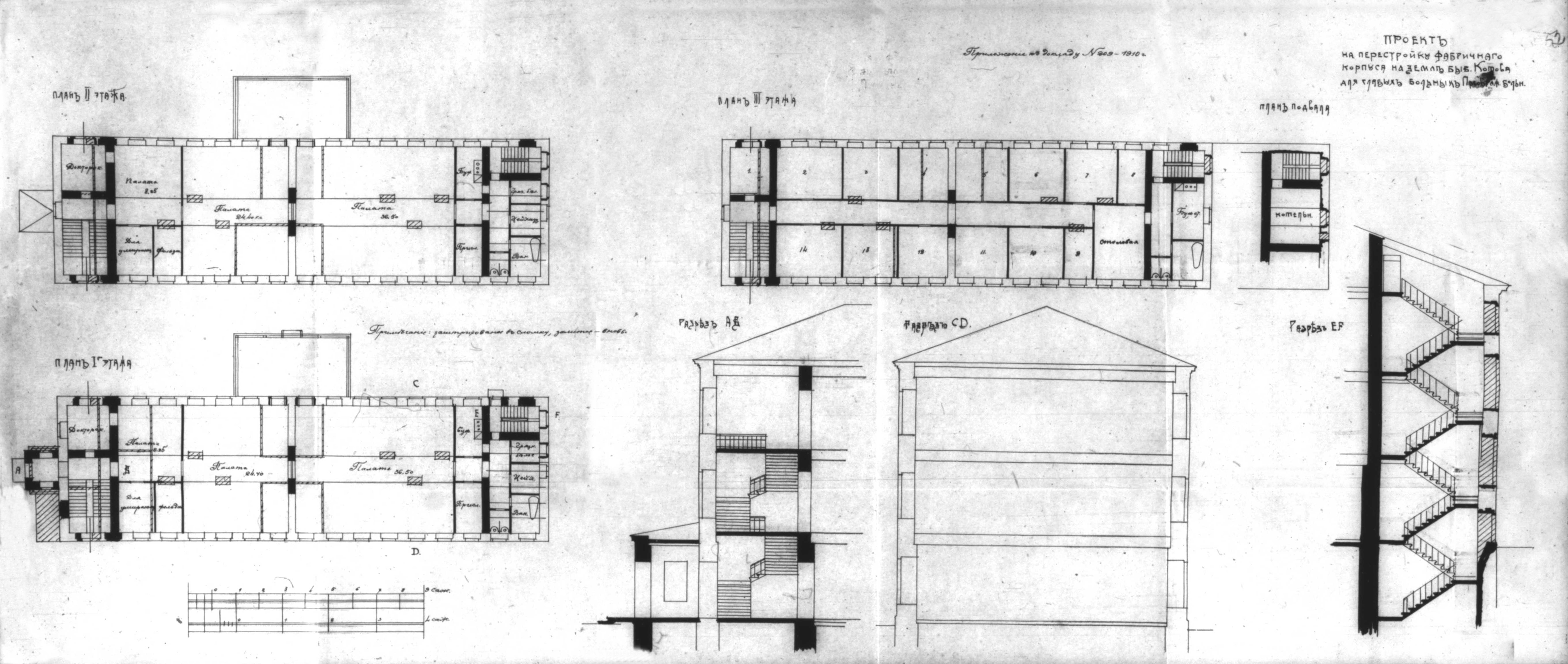
Fig. 1 – I. P. Mashkov's project for the reconstruction of the factory building for the department of the Preobrazhenskaya Hospital [1, l. 52].
By the decision of the Medical Council of the hospital, it was allowed to accommodate weak and unclean patients no higher than the 2nd floor, which was taken into account when drawing up the project by architect I. P. Mashkov. As can be seen from the drawings drawn up by the architect, the two lower floors of the factory building had an identical layout, namely: one doctor's office, three rooms for the accommodation of patients, the size of 37,55+111+166,15 m2, with a terrace facing the garden, and one room each for dying patients, paramedics, servants, buffet, bathroom, a warehouse and dirty laundry storage, a closet for two people (Fig. 1). It was decided to use the 3rd floor of the renovated building to provide apartments from the hospital office for nurses (up to 30 people), who joined the staff of the institution in mid-1910. When organizing hospital treatment and other residential premises on the former factory territory, it became mandatory to include ventilation, exhaust and supply sewers connected to the general urban sewer system through a collector that ran along the other bank of the Yauza River, and connection to the citywide water supply network. The cost of all the work necessary to bring the factory building to a well-maintained hospital department was estimated at 47506 rubles. 40 kopecks [1, L. 47]. Funds for the renovation of the building were allocated by the City Duma at the expense of capital donated "to the ownership of the city of Moscow for the construction of a home for the mentally ill and insane" according to the spiritual will of the widow of the provincial secretary Anna Mikhailovna Khrushcheva [1, l. 48 vol.]. By the end of 1910, the building was put into operation. The first specialized department for the category of weak patients for 80 people appeared in the Preobrazhenskaya Hospital, which, first of all, opened up the opportunity to concentrate the most difficult-to-serve population in one place. The latter not only facilitated the care of this group of patients and the distribution of their duties among a smaller number of medical and service personnel, but also made a huge improvement in the situation of other hospital departments, freeing them up to receive new patients. Simultaneously with the establishment of the department for the weak, the conference of doctors of the Preobrazhenskaya Hospital held discussions with the City Council on the need to remove calm and restless patients from the general wards by organizing special departments for them.
The resolution of the issue was facilitated by the closure of the Staro-Kotovsk department for 100 people in the fall of 1907 due to its unsuitability and the opportunity to transfer about 100 high-profile and dangerous patients to the newly opened District Hospital in the village of Troitskoye, Podolsk District [8, p. 63]. On September 11, 1907, the City Duma decided to add 41,000 rubles to the 1908 budget for the reconstruction of the right wing of the large factory building to organize new departments of the Preobrazhenskaya Hospital [1, l. 33]. In the spring of 1908, work began. However, when city architect I. P. Mashkov drew up detailed estimates for the tasks developed by the conference of doctors of the Preobrazhenskaya Psychiatric Hospital, the amount allocated for the renovation of the building turned out to be insufficient. Planning to expand the number of full-time hospital beds by 120 people through the organization of new departments, the City Council, requesting additional funding from the Mayor, rightly noted that the increase in costs for the proposed repairs could not be reduced without significant damage to the case. After discussion with the Financial and Public Health Commissions, the City Duma issued an additional loan in the amount of 60,448 rubles. 80 kopecks. to adapt the right wing of the building to rooms for the mentally ill [1, l. 37]. During the reorganization of the former factory building, the conference of doctors of the Preobrazhenskaya Hospital announced the main requirements. According to the project, it was approved to open two departments: one for 60 men, the other for 60 women, each of which was divided in half: one half for the calm, the other for the restless chronicles. Observation rooms for 10-12 people and single rooms were introduced at each department. An urgent requirement was the installation of side corridors in the departments, which were reserved for day care of patients and located towards the courtyard.
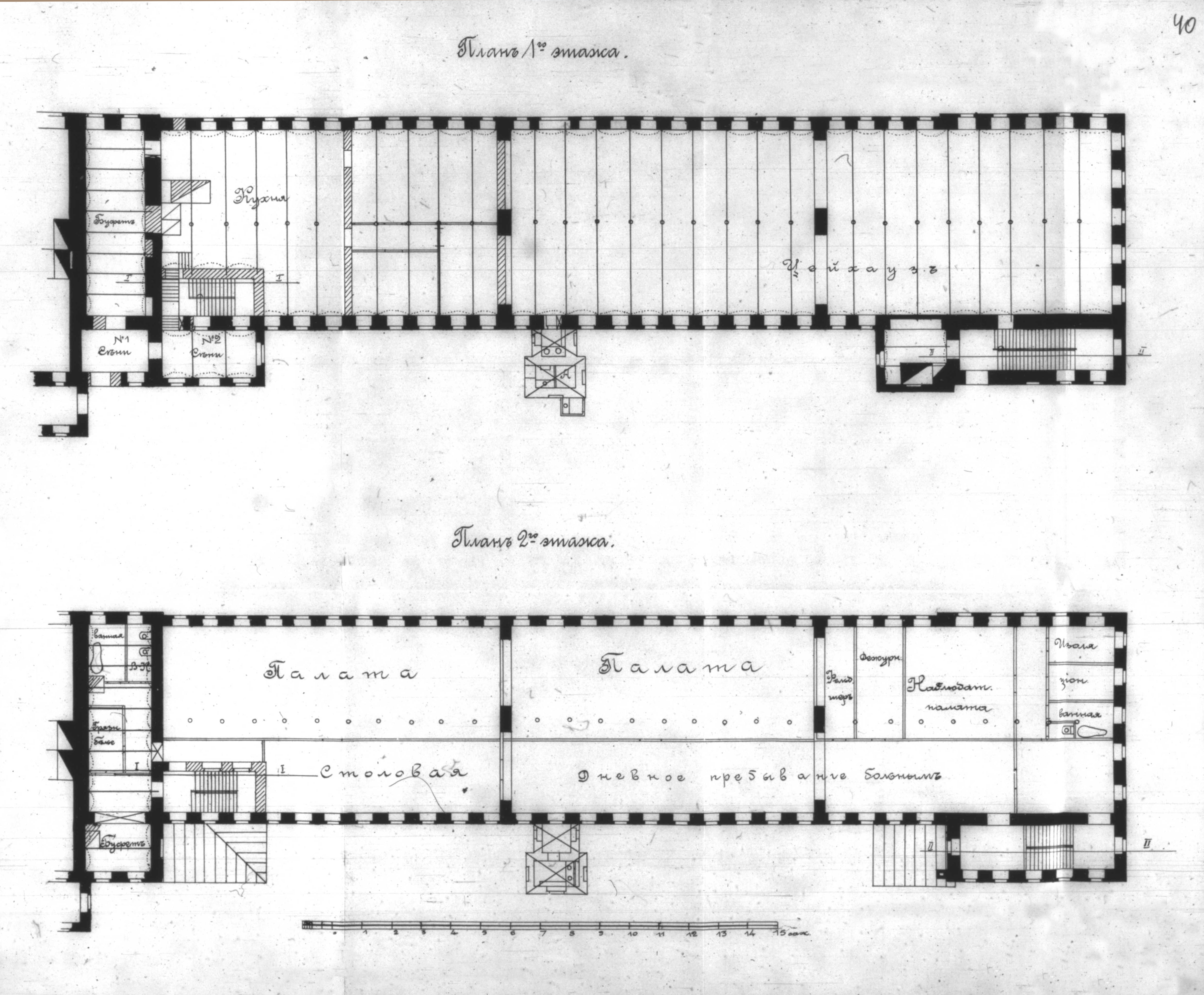
Fig. 2. - I. P. Mashkov's project for the reconstruction of the factory building for the admissions and observation department of the Preobrazhenskaya Hospital [1, l. 40].
During the planning of future departments, views were also expressed on the location of such rooms as: a dining room occupying part of the corridor; a bathroom with appliances for heating water, both for baths and for tea; two closets, a paramedic's room, a pantry, one room for attendants, a dressing room and, if possible, a small room for storage of dirty laundry before its delivery to the warehouse [1, l. 33 vol.]. As can be seen from the drawings drawn up by the architect on the basis of the above tasks (Fig. 2-3), three floors of the building were intended for the accommodation of patients, from which it was supposed to arrange: on the ground floor there is a buffet, a kitchen and a storage room; on the second and third floors, according to the number, name and location of rooms, equally in each, there are two wards, two day care rooms, one observation room, one dining room, three isolation rooms (one with a bathroom), one paramedic's room, one duty room, one pantry, one bathroom, one room for dirty laundry and 2 closets. Above the third floor, it was supposed to arrange a mezzanine in the form of a spare room.
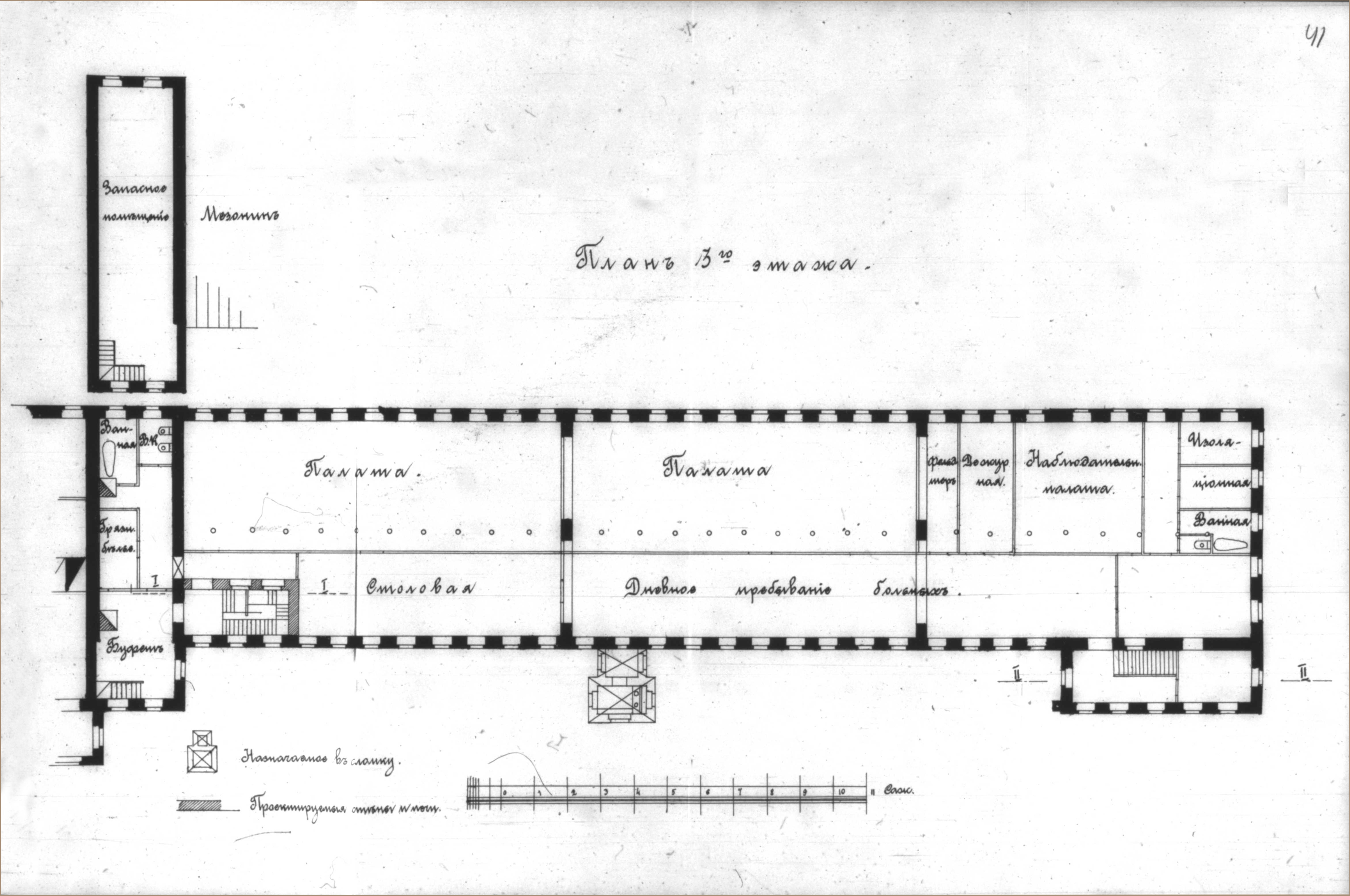
Fig. 3. - I. P. Mashkov's project for the reconstruction of the factory building for the admissions and observation department of the Preobrazhenskaya Hospital [1, l. 41].
In fact, during the renovation, due to the financial constraints already mentioned, it was necessary to abandon the installation of a kitchen for patients on the ground floor and settle for the old system, in which food was prepared in the main buildings of the hospital and delivered to the patients to the new departments in a ready-made form. The rest of the above requirements of doctors for the proper organization of the maintenance and care of patients have been fulfilled. The admission and observation departments, the 4th male and female, with a total of 120 people, were opened on August 6, 1910 [9, p. 79]. The number of full-time positions at the Preobrazhenskaya Hospital has grown to 445.
From the surviving records of the staff resident of the Preobrazhenskaya Hospital, A. L. Lyubushin, head of the open 4th men's department, it is known about its internal layout. It was located on the third floor. The corridor of the department was well lit with a large number of windows, with ordinary frames, without bars and grids. It was intended for daytime stays of patients: here they drank tea, ate according to a schedule, had fun playing cards or checkers, and on reception days, patients met with relatives. The department had 5 wards. The first one was called the observation room and was used to house newly admitted patients. It also housed "patients with severe motor arousal, as well as patients with suicidal tendencies" [10, p. 325]. The windows in the observation room were without bars and screens, the glass was simple, not shipboard. The latter were available only in three separate rooms, two of which were designated to accommodate 2-3 loud or difficult-to-care patients. The third room was reserved for transferring dying patients to it. Dangerous and demanding intensive supervision patients were placed in the second observation ward. The third ward housed quieter patients. However, later, due to the large overcrowding of the department, a significant number of screaming patients and epileptics were accommodated in this ward. Only in the fourth and fifth wards there were patients who did not need strict supervision [10, p. 326]. One of the advantages of the new department was the abundance of light and air. A special feature of the departments was the reorganization of the staff, which, compared with the rest of the hospital departments, was distinguished by the fact that mid-level, paramedic and supervisory staff were completely excluded from the staff, and they were replaced on the one hand by interns, who initially handled part of their work, on the other - by direct care staff. for patients of an elevated type – sisters of mercy. Female care was also introduced in the men's department. For psychiatric care in the late 19th and early 20th centuries, the transition to female care for mentally ill men was an advanced experience, and its chief physician, N. N. Bazhenov, introduced it at the Preobrazhenskaya Hospital. However, the opening of the last departments only temporarily eased the situation of the hospital and did not eliminate the question of its further expansion. By the end of 1910, 541 people remained in 445 full-time beds [3]. Further resolution of the problem of overpopulation of the hospital was solved by the Moscow City Administration with the help of the charity of the citizens of Moscow. On March 21, 1911, the executors of the spiritual will of the hereditary honorary citizen Natalia Mikhailovna Andreeva addressed the Moscow City Duma with a statement about the fulfillment of her posthumous will to turn the capital transferred to the city of Moscow into 100,000 rubles "for the construction of a special building named after the parents of the testator Mikhail Leontievich and Tatyana Andreevna Korolev for the care of the mentally ill" [1, l. 53]. In fulfillment of the will of the testator, it was planned to triple the building for 30-40 patients at the Preobrazhenskaya Hospital in the former possessions of A. F. Kotov according to a plan drawn up by the city architect I. P. Mashkov. The new departments were assigned the function of admissions and observation rooms for newly admitted acute and treated patients. Patient care was organized according to the type of the fourth departments of the Preobrazhenskaya hospital, i.e. it was of a higher type and in charge of the hospital resident. It was also planned to allocate premises for the Mental Illness Clinic at the Medical Faculty of the Higher Women's Courses in the new building. For this purpose, the construction project included an estimate for the construction of an auditorium, laboratory and other educational and auxiliary rooms that could serve for hospital purposes. Analyzing the project of architect I. P. Mashkov attached to the application, we can identify the following structure (Fig. 4).
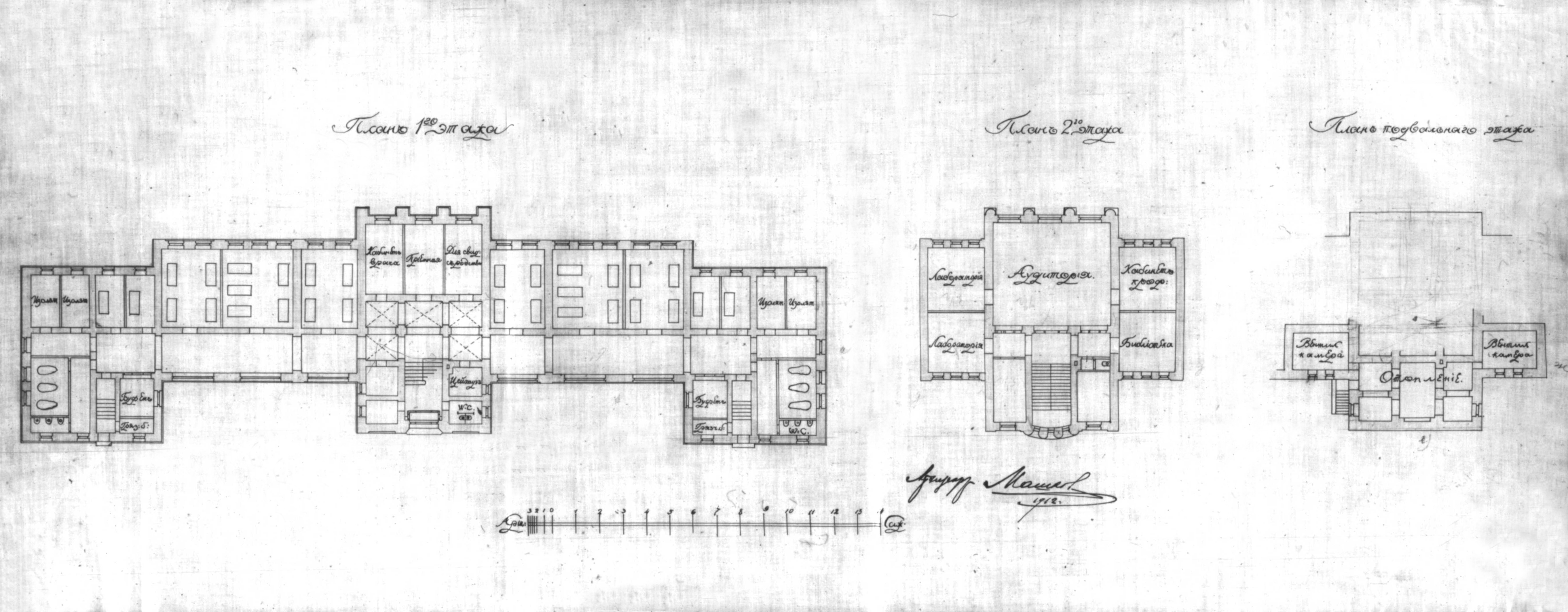
Fig. 4. – I. P. Mashkov's project for the construction of the M. L. and T. A. Korolev building for the admissions and observation department of the Preobrazhenskaya Hospital [1, L. 64].
The building was planned for 15 men and 15 women. The men's and women's departments are one-story, separated by a middle two-story section, which contains: stairs to the 2nd floor, a lobby, a bathroom and a doorman's room, an entrance from the lobby to a waiting room for incoming patients with a doctor's office, a reception room for visiting patients with relatives, a care home and a bathroom for admitted patients before placing them in the department. On the second floor there are: an auditorium, a library, lecturer's offices, two laboratories, two spare rooms and a closet.
Each ward for patients has one ward with five beds, two wards with four beds, two wards with one bed each with a side corridor, in addition, two isolation wards with a separate bright corridor, a pantry, a bathroom with three baths, closets, a dirty laundry room and a back door. After a comprehensive discussion of the organization of the future admission and observation department, the psychiatric conference of the hospital approved the requirements of the executors for the appointment of the building, but made amendments regarding the internal structure of the premises themselves. To facilitate patient monitoring, it was proposed to arrange one ward for 8 patients in each wing of the new building, another for 4, and three more small wards designed to accommodate one person each from restless (screaming) patients; to abandon the 4th isolation ward and use it for other general hospital purposes. It was planned to divide the professor's room and the library into three parts on the 2nd floor and get a third room instead of two, adapting it as an office for assistants and residents of the clinic [1, l. 55]. According to the instructions of the medical commission, architect I. P. Mashkov was assigned to arrange one room in each of the two wings of the new building to prepare patients for going for a walk in the garden. An extra exit from the building was planned for the same purpose. The projected building was provided with heating with supply and exhaust ventilation, sewerage, water supply, and also equipped with electric lighting. On April 18, 1912, the City Council submitted to the City Duma a draft design for the M. L. and T. A. Korolev building for the mentally ill with 30 beds, drawn up by the city architect and coordinated with the medical commission of the Preobrazhenskaya Hospital. By this time, the establishment of a new well-equipped medical building had become an urgent need, since in 1912, due to the critical shortage of places for the mentally ill in Moscow and the overcrowding of the Preobrazhenskaya Hospital with restless and weak patients, the City Council had to reopen a small department for 25 people at the Catherine Poorhouse for weak lying patients [11, p. 2] Therefore, when the construction was completed, the actual number of beds in the new hospital department was prepared for 40 people. On November 21, 1913, the M. L. and T. A. Korolev building was opened with 40 beds and, according to the decree of the City Council, a clinical department was set up at it for students of Higher Women's Courses. The opening of a new department of the Preobrazhenskaya Hospital allowed to increase the number of its staff places to 550 [12, p. 1]. But even with the acquisition of new premises by the hospital, the number of patients always exceeded the standard rate. By January 1, 1914, 663 people remained in the institution [3]. The main contingent that overwhelmed the hospital were restless, weak, and unclean patients. The Khrushchev building, designed for this category of patients (for 40 men and 40 women), was overloaded, for this reason, restless and weak patients again had to be placed in other departments of the hospital. The overcrowding was also affected by the need to open a reception for mentally ill soldiers, of whom 87 people were admitted during the year and only 19 were discharged [13, p. 53]. The opening of a new building was supposed to solve this problem, albeit temporarily. The verdict of the City Duma of May 18, 1912 approved the construction of a two-story stone building for 68 people at a cost of 125,400 rubles according to a preliminary estimate [14]. The funds for the construction of the new building were allocated at the expense of the capital bequeathed by the hereditary honorary citizen of Moscow, Alexandra Vladimirovna Alekseeva, "for the expansion and improvement of the Preobrazhenskaya Hospital, with the naming of the said building after the donor" [14]. After the city architect I. P. Mashkov drew up a draft of the building and detailed estimates for its construction, the Financial Commission approved the final cost of construction in the amount of 14,0040 rubles by resolution dated August 13, 1912 [15, l. 8].
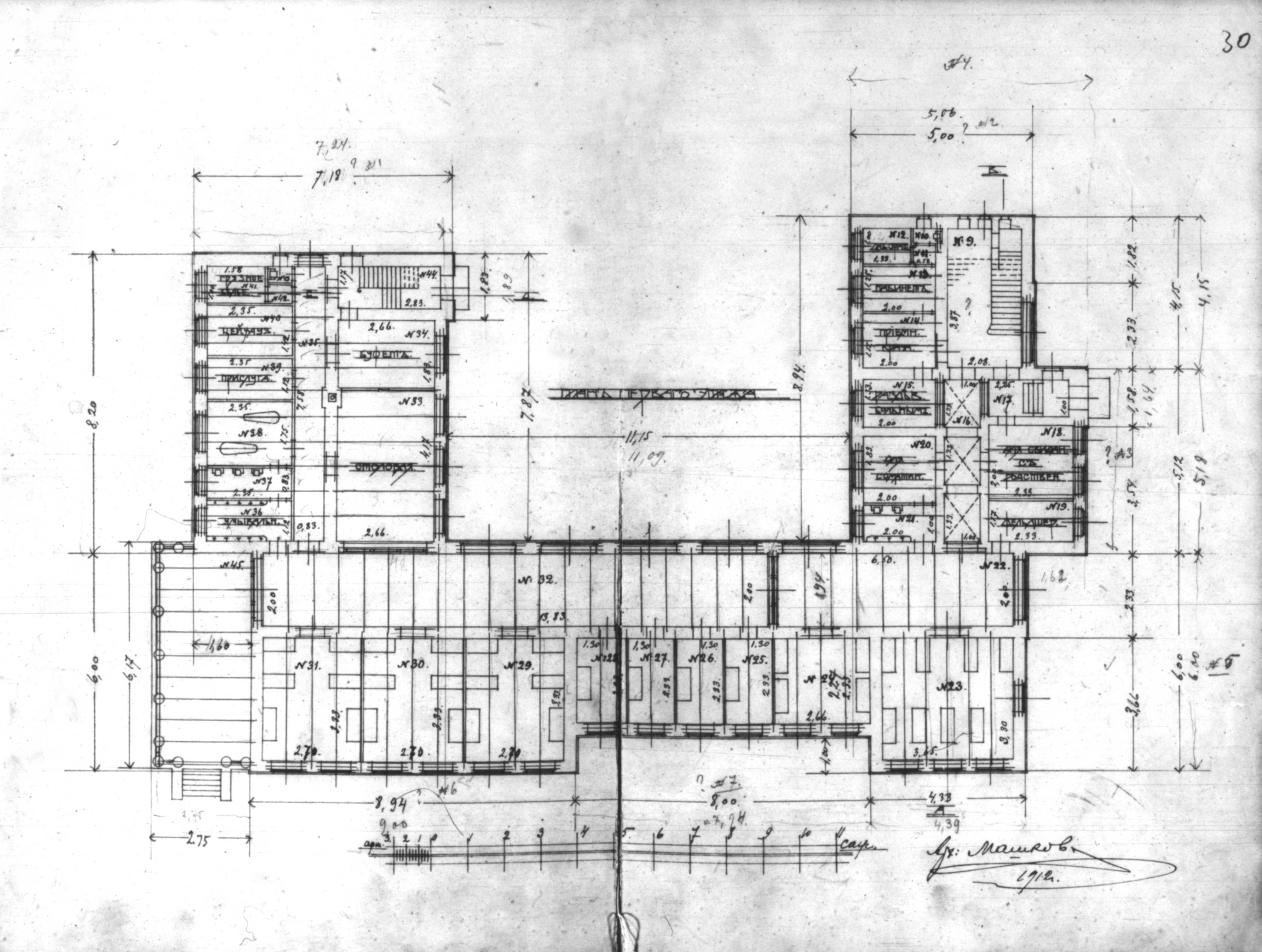
Fig. 5. – I. P. Mashkov's project for the construction of the Alekseeva building for the department of the Preobrazhenskaya Hospital [1, l. 30].
The A.V. Alekseeva building was intended as a men's ward for the restless (1st floor) and semi-restless (2nd floor) patients. Considering the projects of the city architect I. P. Mashkov approved by the conference of psychiatrists, the following structural layout of the building premises can be identified (Fig. 5-6).
Each floor of the department had 3 rooms with 6 beds, 4 single rooms for patients suffering from nightmares, neurotics, degenerates with increased nervous sensitivity, for conscious epileptics during seizures, one room with 4 beds, one room for 8 people and one room on the ground floor with 2 beds for rooms for patients with somatic disorders. The rest of the premises were allocated for paramedics' rooms on both floors, a doctor's waiting room, an office and a laboratory on the ground floor, servants' rooms, rooms for visiting relatives with patients, a billiard room on the second floor, canteens, buffets; and household services: a warehouse, rooms for dirty laundry, baths, washbasins and water closets [16, l. 3-4]. Heating was provided by water with supply and exhaust ventilation. Sewerage, water supply and electric lighting were carried out to the building.
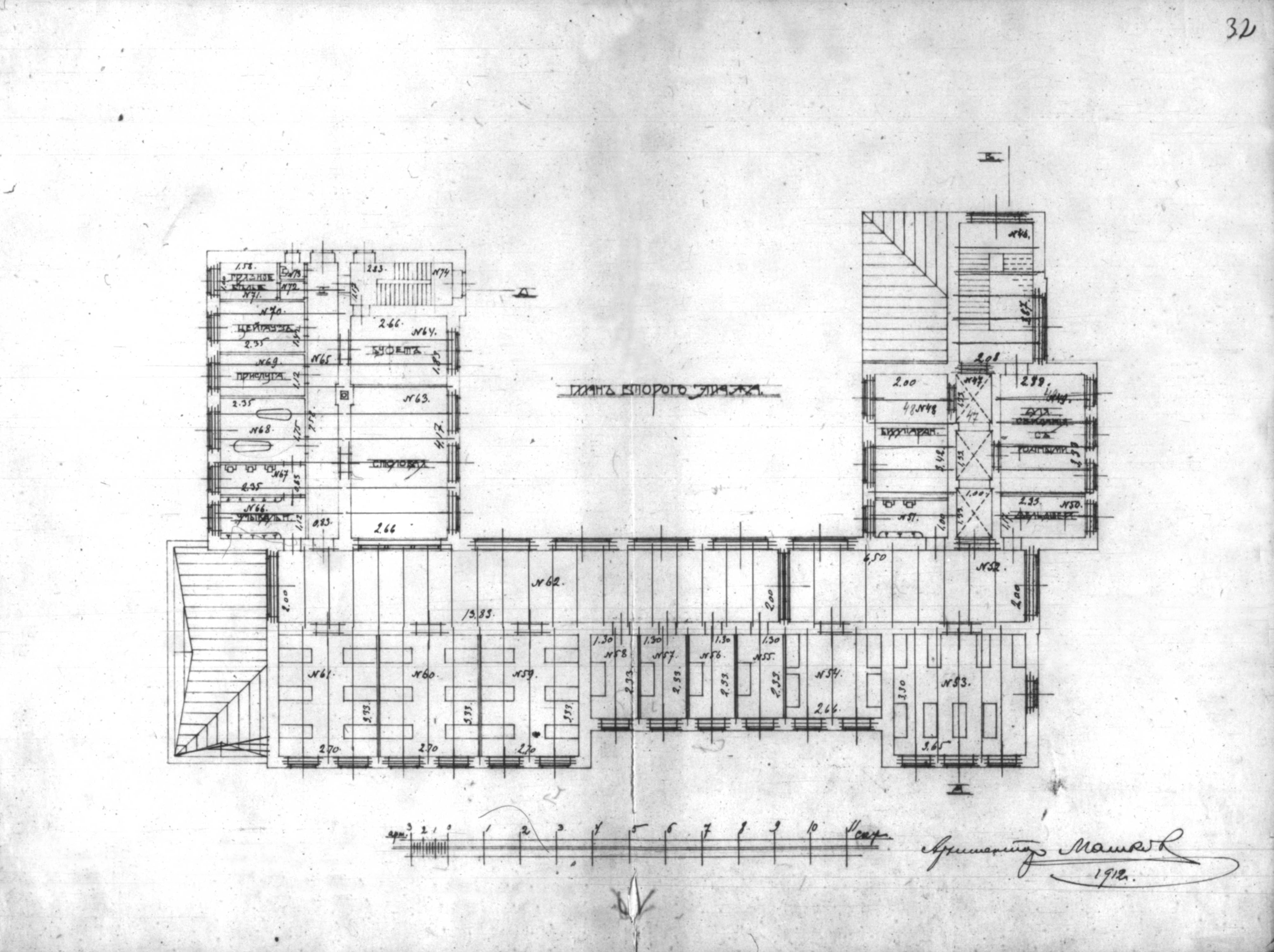
Fig. 6. – I. P. Mashkov's project for the construction of the Alekseeva building for the department of the Preobrazhenskaya Hospital [1, l. 32].
The opening of the new building was planned in early January 1914. But when construction began, it turned out that the terrain profile allowed for the possibility of arranging a basement under part of the building, which, according to the approved estimates, was not supposed to be done. To find out about the most appropriate and useful use of the premises, the City Council considered it necessary to discuss this issue with the conference of doctors of the Preobrazhenskaya Hospital. A well-lit basement was considered for use for three purposes: 1) to place patients there, 2) to place employees there, and 3) to arrange hospital services. However, during the discussion, it was stated that the placement of living quarters in the basement, both for patients and for staff, is considered extremely undesirable [15, l. 8 vol.]. Therefore, the room was allocated for use for general hospital needs, in particular for workshops, since the latter represented a necessary element of any well-maintained psychiatric hospital, whereas in Preobrazhenskaya they were very cramped and huddled in a dilapidated wooden building on the land of the former Kotova, as a result of which they were forced to move from place to place depending on the available available space [24, p. 81]. It is fair to note that even when discussing the construction plan in the possession of the Preobrazhenskaya Hospital, the City Council considered the issue of a separate building for workshops. But since using the basement of the Alekseevsky building for this purpose, with its area of 318.15 m2, turned out to be the most profitable, mainly due to the cheapness of such a device compared to the construction of a new building, the choice was made on the basement. The remainder of the capital bequeathed by A.V. Alekseeva in the amount of 7584 rubles 40 kopecks and 18025 rubles 57 kopecks were used to allocate estimates for the adaptation of the premises, which amounted to a total of 109 rubles 97 kopecks [15, l. 9]. On October 1, 1914, the A.V. Alekseeva building for restless and semi-restless mentally ill men for 68 people was opened in the Preobrazhenskaya Hospital. The standard number of beds has increased to 618 beds. By January 1, 1915, 775 patients (445 men and 330 women) remained in the hospital [17, l. 19]. During the following year, there was an increase in restless and weak patients caused by the war, including due to the influx of refugees from the Privislinsky provinces and the maintenance of mentally ill soldiers evacuated from the front. Being in such a state, the Preobrazhenskaya Hospital, despite all the improvements made in it, was naturally unable to function properly. There was noise in the departments, which was extremely difficult to eliminate, and patients were not sorted according to their individual characteristics for one simple reason – all departments of the hospital, with the exception of the weak ones, became equally full of troublesome elements. In 1916, the average daily number of patients in the hospital was 813 people with 618 full-time positions [17, L. 20].
Conclusion. The expansion of the Preobrazhenskaya Hospital as part of the reorganization of the Moscow City Psychiatric Service in 1900-1914 is one of the key stages in the history of the institution's development. The result of this process is primarily an increase in the availability of the hospital. It is important to note that timely joint activities of the Moscow City Administration and the Medical Council of the Preobrazhenskaya Hospital opened up the opportunity to use all the achievements of psychiatric science to help those in need, including their competent placement according to the profile of disorders.
It is also fair to conclude that it was the emergence of the ability to sort patients into specialized departments that significantly strengthened the hospital's position during the First World War and the subsequent revolutionary crisis. A distinctive feature of the new hospital buildings was their laconic harmony with the surrounding urban and natural landscape, which, in turn, influenced the presentability of the psychiatric institution in the eyes of the population in need of psychiatric care. In particular, we are talking about the work of the city architect I. P. Mashkov on the last two buildings, which were rebuilt a year and a half apart, but had a completely different architectural image. For example, the Korolev Building combined elements of classicism and Art Nouveau, tradition and innovation, which were very characteristic of the 1910s, harmoniously fitting into the natural environment of the park by the Yauza River. Today, the architectural heritage of I. P. Mashkov continues to serve its purpose – the organization of psychiatric care within the walls of the Moscow Psychiatric Clinical Hospital No. 4 named after P. B. Gannushkin.
The article is published in the version approved by the reviewers (after receiving a positive review recommending the manuscript for publication) with corrections made by the author (after receiving the editor’s comments, if any).
Read all reviews on this article
References
1. Russian State Archive of Literature and Art (RGALI). (n.d.). F. 1981. Op. 1. D. 229.
2. Report on the Moscow City Preobrazhenskaya Psychiatric Hospital for 1905. (1906). Moscow: City Printing House.
3. Archive of the Museum of Psychiatric Hospital No. 4 named after P. B. Gannushkin (Archive of the Museum of PCB No. 4). (n.d.). F. 1. Op. 2. D. 1. L. 3.
4. Chronicle and mixture. (1904). Journal of Neuropathology and Psychiatry named after S. S. Korsakov, 1, 1016-1018.
5. Report on the Moscow City Preobrazhenskaya Psychiatric Hospital for 1906. (1907). Moscow: City Printing House.
6. Central State Archive of Moscow (CGAM). (n.d.). F. 179. Op.
7. D. 147. L. 1. 7. Bazhenov, N. N. (1909). History of the Moscow Dollhouse now known as the Moscow City Preobrazhenskaya Hospital for the Mentally Ill. Moscow: Moscow City Public Administration.
8. Report on the Moscow City Preobrazhenskaya Psychiatric Hospital for 1907. (1908). Moscow: City Printing House.
9. Report on the Moscow City Preobrazhenskaya Psychiatric Hospital for 1910. (1911). Moscow: City Printing House.
10. Lyubushin, A. L. (1912). Impressions of a new type of care for patients in the fourth male department of the Preobrazhenskaya Hospital. Journal of Neuropathology and Psychiatry named after S. S. Korsakov, 2-3, 323-352.
11. Report on the Moscow City Preobrazhenskaya Psychiatric Hospital for 1912. (1913). Moscow: City Printing House.
12. Report on the Moscow City Preobrazhenskaya Psychiatric Hospital for 1913. (1914). Moscow: City Printing House.
13. Report on the Moscow City Preobrazhenskaya Psychiatric Hospital for 1914. (1916). Moscow: City Printing House.
14. Archive of the Museum of PCB No. 4. (n.d.). F. 1. Op. 2. D. 2. L. 1.
15. RGALI. (n.d.). F. 1981. Op. 1. D. 238.
16. RGALI. (n.d.). F. 1981. Op. 1. D. 230.
17. CGAM. (n.d.). F. 179. Op. 3. D. 1690.
Peer Review
Peer reviewers' evaluations remain confidential and are not disclosed to the public. Only external reviews, authorized for publication by the article's author(s), are made public. Typically, these final reviews are conducted after the manuscript's revision. Adhering to our double-blind review policy, the reviewer's identity is kept confidential.
The list of publisher reviewers can be found here.
The reviewed article is devoted to the analysis of the reorganization of psychiatric care in Moscow in the period from 1900 to 1914 using the example of the Preobrazhenskaya Hospital for the Mentally Ill. The author examines the interaction of the Moscow City Public Administration, the medical community and architects in the context of the modernization of psychiatric care in the early 20th century. Special attention is paid to adapting factory buildings to the needs of the hospital, increasing the bed capacity, introducing new standards of treatment and care, as well as the role of charity in the development of medical infrastructure. The methodological basis of the article consists of historical-systemic and historical-comparative methods. The author actively uses archival materials, hospital reports, design documents and drawings, which allows reconstructing the transformation process with a high degree of reliability. The application of a micro-historical approach to the study of an individual institution allows us to identify important details in the development of psychiatric care in Russia at the beginning of the 20th century. The topic of the article is in line with modern historical and anthropological research focused on the study of the social history of medicine, the history of urban governance and the interaction of government, society and science. The relevance of the work is also due to the steady interest of historiography in the history of charity, as well as the history of medicine, including the architecture of medical institutions and the evolution of approaches to the treatment of mental disorders. In the context of modern discussions about the reform of the psychiatric service in Russia, the historical experience presented in the article is of particular importance. The scientific novelty of the article lies in the detailed reconstruction of the process of reorganization of the Preobrazhenskaya Hospital on the basis of archival materials that had not previously been put into scientific circulation (deposited in the archives of TSAM and RGALI), as well as a large complex of annual reports of the hospital. The author demonstrates how, under the influence of medical initiatives, urban planning policy, and private donations, a model of psychiatric care was formed that combined therapeutic and social functions. For the first time, the role of architect I. P. Mashkov in the creation of specialized buildings, as well as the practice of collaboration between doctors and architects, is analyzed in such detail. The article has a clear structure, the logic of presentation is consistent, and the style of work is scientific. The author uses a wide range of sources, including materials from RGALI, CGAM, PKB archive No. 4, published hospital reports and periodicals of the early 20th century. At the same time, there are no references to research on the history of psychiatry in Russia in the list of references, which somewhat narrows the context of the work. The author takes into account possible counterarguments related to the limited source base or the interpretation of the role of individuals (for example, N. N. Bazhenov). However, the article could benefit from a more active polemic with existing historiography, in particular, with works devoted to the regional peculiarities of the development of psychiatric care in the Russian Empire. The work uses rare historical sources, which allows the author to reconstruct in detail the process of reorganizing the hospital. The work successfully combines elements of the history of medicine, architecture and urban management. The importance of the activities of the chief physician N. N. Bazhenov and architect I. P. Mashkov is shown. The article could benefit from using the theoretical concepts of M. Foucault or I. Hoffman in the analysis of isolation and control in psychiatric institutions. It is clear that at the analytical level it is difficult to make comparisons with similar processes in other cities of Russia or Europe, but based on the examples of historiography, such a context would not hurt. It can be noted that there is a somewhat excessive concentration on architectural and financial aspects, which sometimes overshadow the social and medical context. The key conclusion of the article is that the reorganization of the Preobrazhenskaya Hospital not only increased its capacity, but also allowed the introduction of modern standards of treatment and care. The author rightly emphasizes that the creation of specialized departments and the sorting of patients have become an important step in the humanization of psychiatric care. However, the conclusion about the "presentability" of a psychiatric institution for the population requires a more detailed justification. The article will be of interest to specialists in the field of medical history, urban studies, social history, as well as architects and local historians. The work can be used in educational courses on the history of Russia at the beginning of the 20th century, the history of healthcare and social policy. The article "Reorganization of psychiatric care in projects of the Moscow City Public Administration. The Preobrazhenskaya Hospital for the Mentally Ill 1900-1914 meets academic standards and is of scientific interest. Despite some comments, the work makes an important contribution to the study of the history of medicine and urban governance in Russia. I recommend the article for publication in the journal Genesis: Historical Research after minor revision related to strengthening the theoretical framework and expanding the historiographical context.
|

 Eng
Eng






 © 1998 – 2026 Nota Bene. Publishing Technologies. NB-Media Ltd.


